
Nail care / Published 2026-11-24
How to Grow Nails Faster
Want longer nails sooner? Learn how to grow nails faster with daily cuticle oil, gentle filing, protein-rich food and the habits that protect new growth.
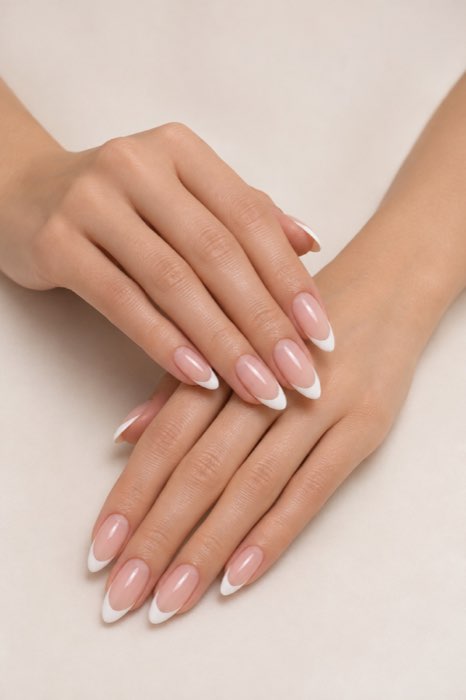 Original Nail Art Inspo image
Everyone wants longer nails fast, but nails grow on their own schedule — about three millimetres a month for fingernails. No cream, oil, or supplement can double that speed. What you can do is stop losing the length you already grow: most people do not have slow nails, they have nails that snap, peel, and break before the new length ever shows.
This guide explains how to grow nails faster in the honest sense: how fast nails really grow, why yours may seem slow, the daily routine that protects new growth, what to eat, which products help, and a four-week plan to longer nails — plus the signs that mean a doctor should take a look.
At a glance: grow nails faster
| Growth factor | Do this | Why it works |
|---|---|---|
| Growth speed | Protect length, don't chase speed | Nails grow ~3 mm a month — you keep what you grow |
| Dry, brittle nails | Oil twice a day, cream after washing | Flexible nails bend instead of snapping |
| Breaks at the same spot | Keep nails shorter, file in one direction | Less leverage, fewer breaks |
| Cuticle damage | Push cuticles back, never cut them | The cuticle protects the nail root |
| Weak, peeling nails | Use a strengthener base coat | A hard coat supports the growing nail |
| Slow growth | Eat protein, iron and zinc; stay hydrated | Nails are built from what you eat |
| Water damage | Gloves for washing up and cleaning | Less swelling and drying, less peeling |
How fast do nails actually grow

Fingernails grow about three millimetres a month — roughly a tenth of a millimetre a day. That means a full fingernail takes three to six months to replace itself from cuticle to tip. Toenails grow far slower, about one millimetre a month, and can take a year or more to regrow completely.
Growth is fastest on your dominant hand, in summer, and in younger people; it slows with age and in cold weather. The growth happens in the nail matrix, the hidden tissue under the cuticle — so everything you do for growth is really about protecting that root and keeping the new nail intact while it travels to the tip.
Why your nails grow slowly
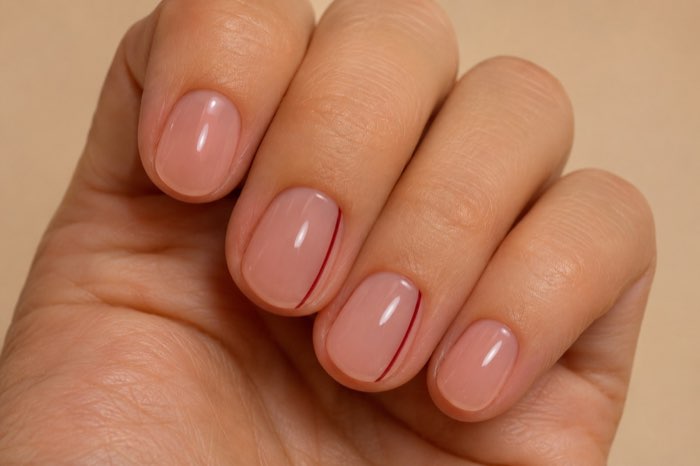
True slow growth is rare. What most people call slow growth is actually breakage: the nail grows at a normal speed, but the free edge snaps, peels, or splits before it gets long. Water, harsh removers, peeling off gel, and using nails as tools all shorten the nail faster than it can grow.
Real slow growth has other causes: a diet low in protein or iron, thyroid problems, some medicines, illness, and age. Damage at the nail root — from cutting cuticles or a hard knock — also shows up as a weak, slow-growing nail for months. If all ten nails are slow and nothing in your routine explains it, the cause is worth checking with a doctor.
The daily routine: oil and cream
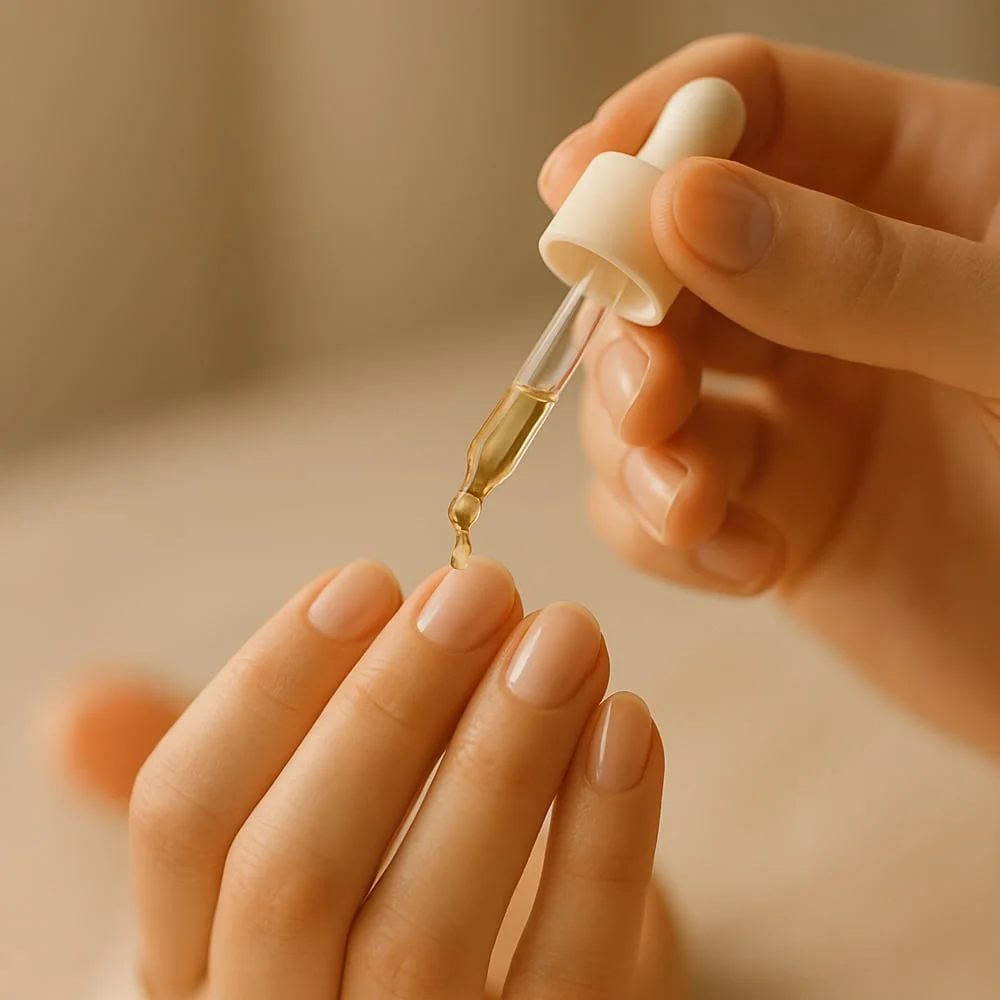
Growth is protected by a small daily routine, not by occasional treatments. Twice a day, massage a drop of cuticle oil into each nail and the skin around it — morning and before bed. Oil keeps the nail plate flexible, and a flexible nail bends where a dry nail snaps. Follow with hand cream, and reapply cream after every hand wash.
Keep the routine short enough to stick to: oil, cream, done. Two minutes a day beats an hour-long treatment once a month. Our nail care guide covers the full routine, including how often to trim and how to look after cuticles without cutting them.
Filing: the right way to shape growth
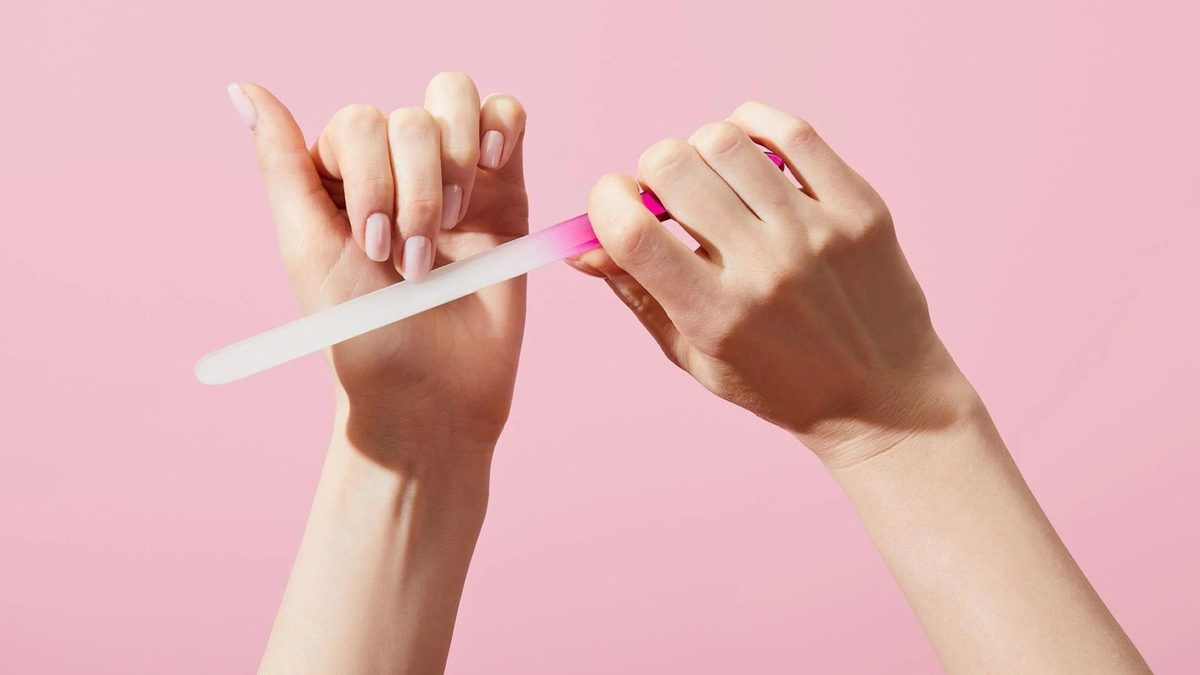
Filing is where growing nails usually get ruined. A coarse metal file used back and forth saws through the layers of the nail plate and leaves a frayed edge that peels and splits. Switch to a fine glass or crystal file, or a fine-grit emery board, and file in one direction only, from the side toward the center.
Keep nails at a modest length while they grow — just past the fingertip is enough. Short nails take far less leverage from everyday knocks, so the length survives while the stronger nail grows in. Round the corners slightly rather than leaving them square: a square corner concentrates stress in one spot. Our guide to shaping almond nails shows the filing sequence that keeps the free edge even and strong.
Cuticle care: push, never cut
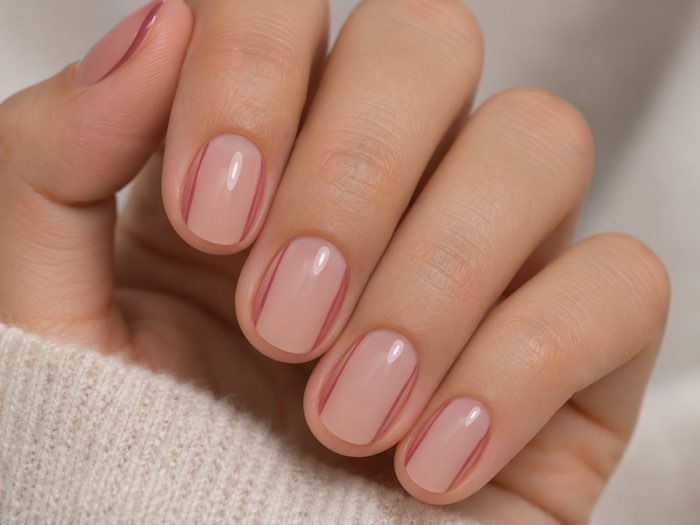
The cuticle is not decoration — it seals the nail root against water and germs, and the root is where growth happens. Cutting cuticles opens that seal, risks infection, and can damage the matrix so the nail grows back with ridges or weak spots. Never cut your cuticles, and never let anyone else cut them for you.
Instead, soften cuticles after a shower or hand wash and gently push them back with an orangewood stick or a soft towel. Then massage in cuticle oil. Healthy, pushed-back cuticles make the nail look longer right away — and they protect the growth happening underneath.
Eating for faster growth

Nails are built from what you eat, and they sit near the back of the queue: the body sends nutrients to vital organs first, so nails are one of the first places a poor diet shows. Protein is the foundation — nails are keratin, and keratin is protein — so include a protein source at every meal: eggs, beans, lentils, fish, yoghurt, or nuts.
Iron, zinc, and biotin all support nail growth, and they are easy to get from food: red meat, spinach, and lentils for iron; pumpkin seeds, chickpeas, and whole grains for zinc; eggs, salmon, and sweet potatoes for biotin. Drink enough water too — dehydrated nails are dry nails. If your nails are weak as well as slow, our guide to strengthening weak nails covers the same diet in more depth.
Base coats and strengtheners that help
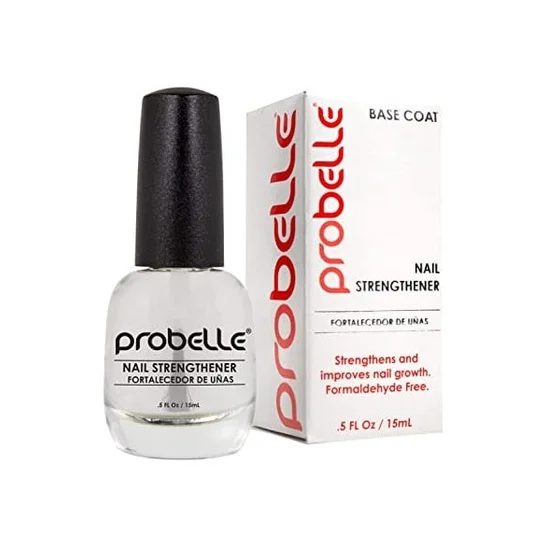
A nail strengthener is a hard base coat that adds a rigid layer over a growing nail. It does not make the nail grow faster, but it stops the new length from bending and breaking before it shows — which is exactly what slow growth usually is. Apply one coat to clean, bare nails, let it dry, and add a second coat; reapply every two or three days and remove and restart once a week.
Do not use a strengthener every day for months without a break. Some formulas contain formaldehyde, which hardens nails but can make them brittle with overuse — the nail becomes rigid and snaps instead of bending. If your nails feel harder but break more, stop the strengthener for two weeks and switch to oil-only care. A plain ridge-filling base coat under polish gives most of the protection with none of the risk.
Protecting nails from water and chemicals
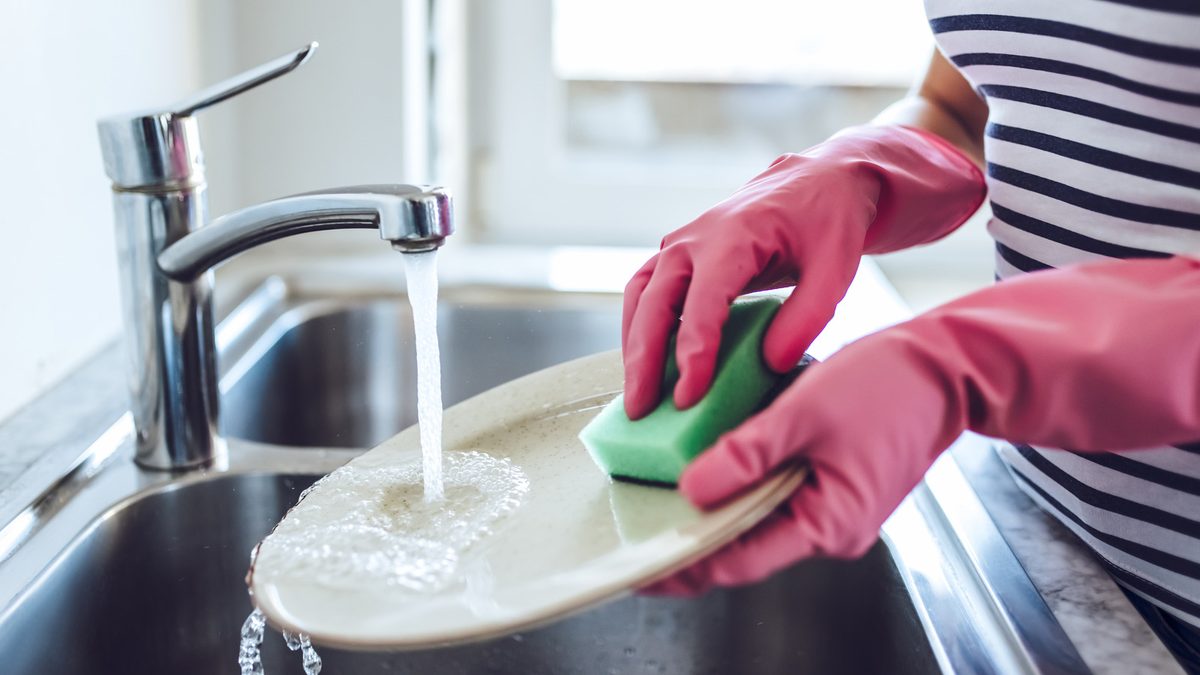
Water is the quiet enemy of growing nails. Every wash swells the nail plate, and every dry-out shrinks it again; over weeks that cycle separates the layers and causes peeling. You cannot stop washing your hands, but you can cut the exposure: wear rubber gloves for washing up, cleaning, and laundry, and keep showers and baths to a normal length.
Drying matters too. Pat hands dry instead of rubbing, and moisturize right after washing while the skin is still slightly damp — cream locks in the water instead of letting it evaporate. Harsh cleaning products and acetone remover dry nails out as well, so wear gloves for cleaning and choose a gentle, acetone-free remover when you can. Our guide to making a manicure last longer covers the habits that keep polish on and growing nails intact.
Habits that stop growth in its tracks

Some habits undo every good thing you do for your nails. Biting tears the nail at the root and damages the matrix, so the nail grows back weak. Peeling off polish or gel lifts the top layers of the nail plate with it. Using nails as tools — opening cans, scratching labels, prying things open — puts all the force on the weakest point of the nail and snaps the length you just grew.
Stop one habit at a time and replace it rather than just quitting. Keep a file in your bag so a snag gets filed instead of picked; keep cuticle oil on your desk so fidgety hands have something to do; keep nails short while you break the biting habit, since there is less to bite. If a nail does break despite your care, our guide to fixing a broken nail at home shows how to patch it so it survives until it grows out.
Supplements: only if you are deficient

Biotin is the supplement everyone asks about, but the honest evidence is narrow: biotin helps nails mainly in people who are actually deficient in it, which is uncommon. If you eat a normal diet with eggs, nuts, and fish, extra biotin is unlikely to speed up your nails — and very high doses can interfere with some blood tests, so always tell your doctor if you take it.
Iron and zinc supplements are the same story: they help growth only when blood levels are low. A blood test tells you whether you are deficient before you spend money on pills. Food first, test second, supplement only on a doctor's advice — that order keeps you from chasing a fix for a problem you do not have.
Your 4-week nail growth plan
Week one is about stopping the damage: trim nails to just past the fingertip, switch to a glass file, start oiling twice a day, push cuticles back instead of cutting them, and wear gloves for wet work. Take a photo of your nails from the side so you can measure progress later.
Weeks two to four are about building: keep the oiling habit, add a strengthener if your nails still bend too easily, eat protein at every meal, and stop biting and peeling. By week four you should see about three millimetres of new growth at the base — a smoother, stronger band of nail. Measure against your photo: real growth is visible, even if it feels slow.
When to see a doctor
Most slow nails improve with care, but some need a doctor. See a doctor if one nail changes suddenly and stays changed — deep ridges, pitting, a nail lifting from the bed, dark lines under the nail, or a nail that thickens and crumbles. See a doctor sooner if there is pain, swelling, redness, or pus around the nail, which can mean infection.
Also ask about blood tests if all ten nails grow slowly and nothing in your routine explains it: low iron, thyroid problems, and vitamin deficiencies all show up in nails first. A dermatologist can tell the difference between a nail problem and a skin condition affecting the nails, and can confirm whether a supplement is actually worth taking.
Frequently asked questions
How fast do nails grow?
Fingernails grow about three millimetres a month, roughly a tenth of a millimetre a day. A full fingernail takes three to six months to replace itself from cuticle to tip. Growth is fastest on your dominant hand, in summer, and in younger people, and it slows with age and in cold weather.
Can you make nails grow faster?
You cannot double the growth rate — growth happens in the nail matrix under the cuticle, and no cream or supplement changes that speed much. What you can do is keep the length you grow: oil daily, file gently, wear gloves for wet work, and stop biting and peeling. Most 'slow' nails are really nails that break before they look long.
Does cuticle oil help nails grow?
It helps in the practical sense: oil keeps the nail plate flexible, so the new length bends instead of snapping off. It also protects the cuticle and the nail root, where growth happens. Jojoba oil works well because it sinks into the nail plate, but any cuticle oil used twice a day beats an expensive treatment used once a month.
Do nail strengtheners make nails grow faster?
No — they do not speed up growth. They add a hard layer that stops the growing nail from bending and breaking, so more of the new length survives. That makes them genuinely useful while nails grow out, as long as you take breaks and keep oiling alongside them.
What foods help nails grow faster?
Protein first: eggs, beans, lentils, fish, yoghurt and nuts, since nails are made of keratin, a protein. Iron from red meat, spinach and lentils, zinc from pumpkin seeds and chickpeas, and biotin from eggs and salmon all support growth. Supplements only help if you are actually deficient — a blood test tells you that.
Should I take biotin for nail growth?
Only if you are deficient, which is uncommon on a normal diet. Biotin helps nails mainly in people who lack it; extra biotin on top of a normal diet is unlikely to speed growth, and very high doses can interfere with some blood tests. Ask your doctor for a blood test before buying biotin pills.
Why do my nails break before they get long?
Usually water and habits: nails swell when wet and shrink when dry, and that cycle peels the layers apart. Peeling off polish or gel, biting, and using nails as tools snap the free edge. Keep nails shorter while they grow, file in one direction, wear gloves for wet work, and oil twice a day.
Conclusion
Nails grow about three millimetres a month, and no product changes that — but most 'slow' nails are really nails that break before they look long. Oil twice a day, file gently in one direction, push cuticles back instead of cutting them, wear gloves for wet work, and eat enough protein. Give it four weeks and you will see a stronger band of new growth at the base — and in three to six months the length you kept will be the length you can finally show off.
Sources and verification
- FDA: Nail care products — U.S. Food & Drug Administration nail-care guidance.
- FDA: Using cosmetics safely — FDA cosmetic safety guidance.
- American Academy of Dermatology: Healthy nail tips — everyday nail-care guidance.
- NHS: Nail problems — when to seek advice.
Related guides
Affiliate disclosure: Some links below are affiliate links. If you buy through one, Nail Art Inspo may earn a commission at no extra cost to you. That relationship does not change the comparison criteria. As an Amazon Associate, Nail Art Inspo earns from qualifying purchases.